7 Signs Your Sofa Needs Professional Cleaning Right Now



Your sofa is one of the most used pieces of furniture in your home yet it’s often the most neglected when it comes to cleaning. Here are 7 clear signs it’s time to call in the professionals.
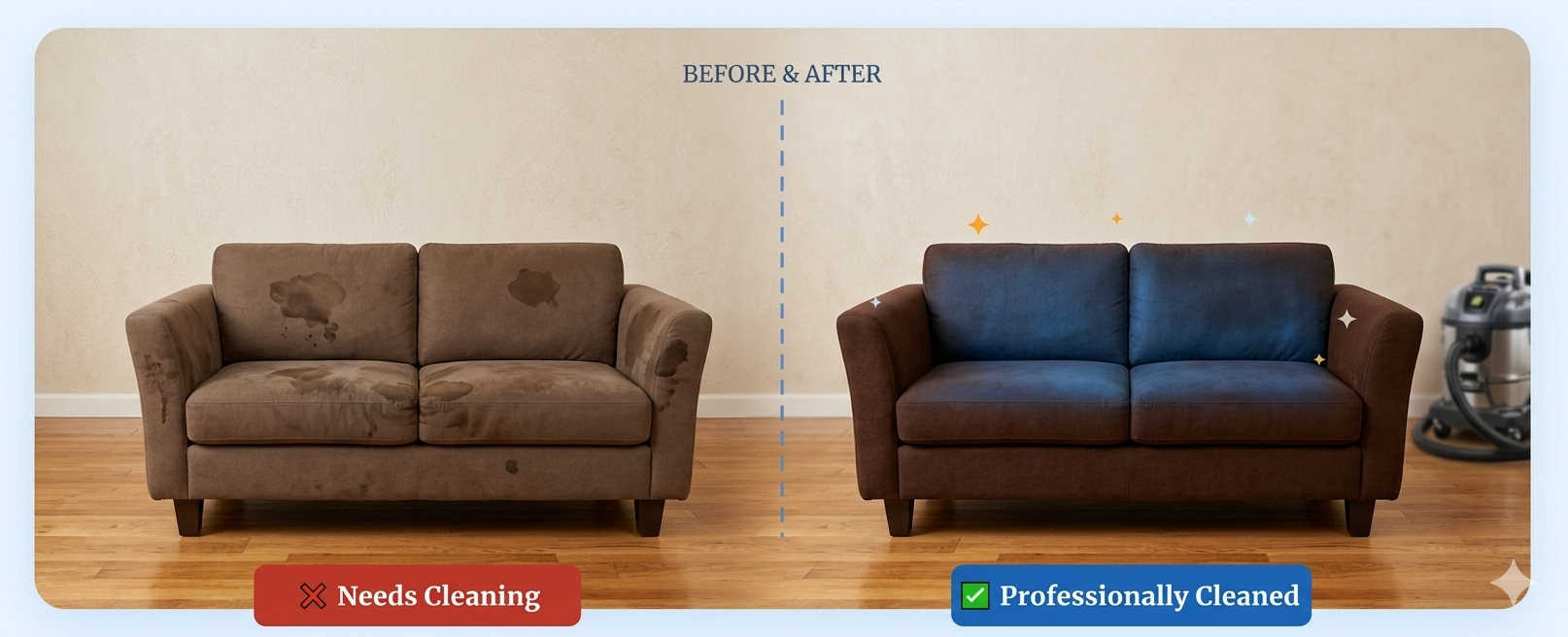
If you’ve tried home remedies baking soda, vinegar, store-bought sprays and the stains are still there, that’s your sofa crying for professional help. Food spills, tea, coffee, and ink stains penetrate deep into fabric fibers. DIY methods only clean the surface. Professional cleaning uses hot water extraction and enzyme-based solutions that break down stains from the root.
Old stains that have set for more than 48 hours almost always need professional treatment to fully remove.
Does your sofa smell musty, sour, or like pet odors even after airing it out? Odors are caused by bacteria, sweat, food particles, and moisture trapped deep inside the cushions and foam. No amount of air freshener fixes this it just masks it. A professional deep clean eliminates the odor source completely, leaving your sofa smelling genuinely fresh.
Pet owners especially should schedule a professional clean every 3 – 4 months to control dander and odor buildup.
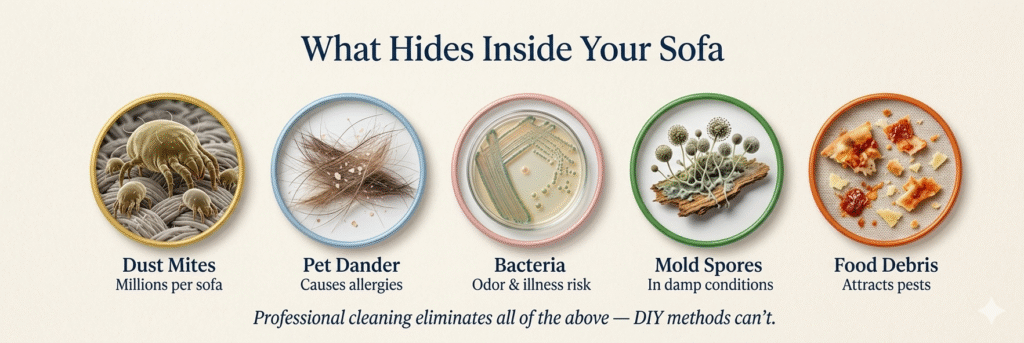
Sofas are one of the biggest collectors of dust mites, pet dander, pollen, and mold spores in any home. If you or your family have been sneezing more, experiencing itchy eyes, or waking up with congestion your sofa could be the hidden culprit. Professional cleaning removes up to 99% of allergens trapped in the fabric, significantly improving your indoor air quality.
Dust mites thrive in upholstered furniture. A single sofa can harbor millions of them if not cleaned regularly.
Over time, accumulated dirt, skin oils, and dust cause sofa fabric to look dull, faded, and flat even if it isn’t visibly stained. If your sofa looks older than it actually is, that’s a strong sign it needs a professional refresh. Expert cleaning restores the fabric’s original texture, brightness, and feel, making your sofa look nearly new again.
Regular professional cleaning every 12–18 months can extend your sofa’s lifespan by several years, protecting your investment.
If you can’t remember the last time your sofa was professionally cleaned or if it has never been cleaned that alone is reason enough. Even if your sofa looks clean to the naked eye, it has accumulated a significant amount of bacteria, dust, and allergens over months of daily use. Out of sight doesn’t mean out of harm. A once-a-year professional clean is the minimum recommended by upholstery experts.
Think of sofa cleaning like car servicing you do it regularly even when everything seems fine.
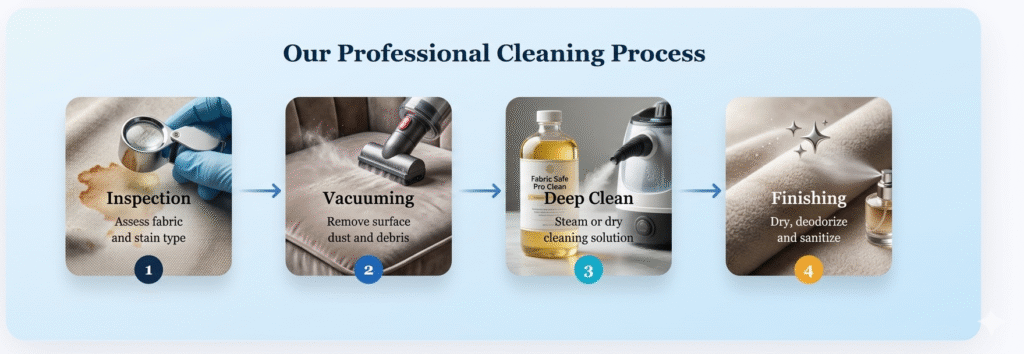
Run your hand across your sofa cushions. If they feel gritty, rough, or stiff instead of soft and smooth that’s a buildup of dirt, dead skin cells, and debris embedded in the fabric fibers. This not only feels unpleasant but is also slowly damaging the fabric itself. Professional hot water extraction or dry cleaning removes these particles without harming the material.
Gritty fabric is one of the earliest signs of deep-seated dirt the longer you wait, the harder it is to fully restore.
Your sofa deserves more than a quick vacuum once in a while. If you’ve spotted even one or two of these signs, it’s time to book a professional cleaning. Not only will your sofa look and smell better your home will be healthier, your family safer, and your furniture will last significantly longer. Don’t wait until the damage is too deep to fix.
Most sofas take between 1 to 2 hours depending on size, fabric type, and level of soiling. Drying time is usually 2–4 hours afterward.
Yes — a professional cleaner will first inspect your fabric type (microfiber, velvet, leather, cotton, etc.) and choose the appropriate cleaning method to avoid any damage.
At least once a year for regular households. Every 6 months if you have pets, children, or allergy sufferers at home.
Most stains can be fully removed or significantly reduced. Very old or set-in stains may not completely disappear, but professional treatment will always achieve better results than DIY methods.